
Placing a Dumpster on a Steep Cabin Driveway in the Smokies
Half the driveways around here climb a ridge on gravel switchbacks, and a lot of out-of-town haulers simply can't set a container on them. Here is what actually makes a mountain-lot placement work.
In this guide
- The mountain-lot problem
- What the truck needs
- Choosing the right size for the grade
- How to prep your lot
- The photo that saves a trip
If your cabin sits up a ridge on a gravel switchback, you may have been told a dumpster can't be placed there. Often that's just a hauler who doesn't know these lots. Placing a roll-off on a steep mountain driveway is absolutely doable - it simply takes the right size, the right approach and a bit of prep. Here's how it works.
The mountain-lot problem
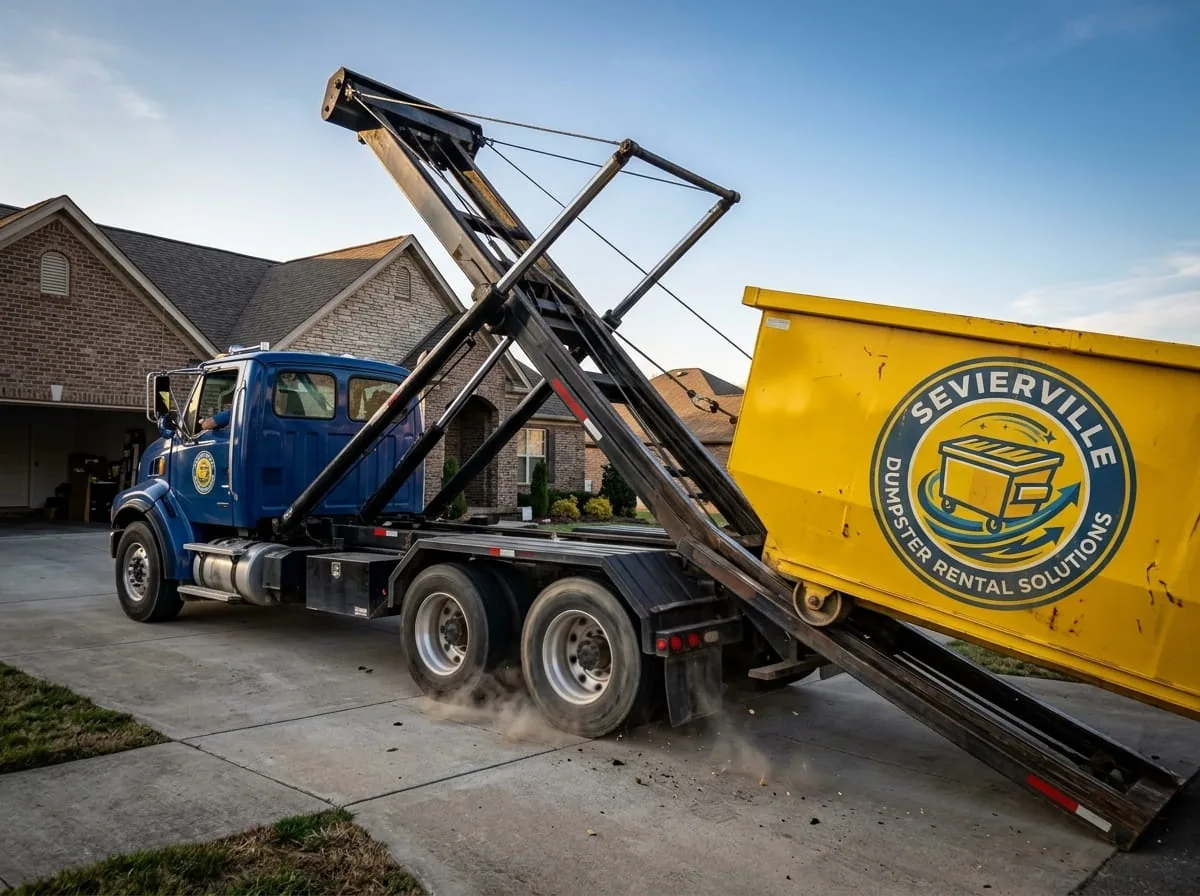
The driveways toward Pigeon Forge, Gatlinburg and Wears Valley aren't like a flat suburban drive. They climb, they curve, they're often gravel, and they can be tight between trees and drop-offs. A roll-off truck is long and heavy, and when it tips to set a container the bed rises well above roof height - so grade, curve and overhead clearance all come into play at once.
An out-of-town driver who hasn't worked these lots may take one look and leave. A local one plans the approach and gets it done. The physics haven't changed; the experience has.
What the truck needs
Three things make a placement work. A straight-ish approach to the drop point, so the container can roll off in line rather than sideways. Firm ground that carries the truck's weight - gravel is usually fine, soft mud after rain less so. And overhead clearance, because the raised bed needs clear air; low limbs are the single most common thing that stops a mountain delivery.
Grade matters, but it's rarely a total blocker on its own - a good driver sets the container with the truck positioned to control the roll. It's grade combined with a tight curve or low limbs that turns a lot into a genuine puzzle, and even then there's usually a workable spot.
Choosing the right size for the grade
On a steep or tight lot, the container size is often decided by access rather than by the amount of debris. A 10 or 15 yard needs the least approach room and the least overhead, so it's frequently the right call on a mountain drive even when the job could fill something bigger. If the volume genuinely needs more, we'll swap a smaller container rather than force a big one where it can't safely go.
Access beats volume on a mountain lot. A right-sized container swapped once is far better than a big one that can't be placed - or worse, one that's placed and then can't be retrieved.
How to prep your lot
You can make a placement much easier. Clear vehicles and obstacles from the drive and the drop point. Trim any low branches you safely can along the approach. If the ground is soft from rain, let it dry a day if the schedule allows. And point out anything a driver wouldn't see - a septic lid, a soft shoulder, a hidden culvert, a weak edge on the drive.
We plank under the container on every delivery to protect the surface and spread the weight, which matters doubly on gravel and decorative drives.
The photo that saves a trip
The single most useful thing you can do: when you book, send a photo or two from the street, looking up at your intended spot, with the sky in the frame so we can see the overhead. From that we can usually tell what size will fit, whether the approach works, and where the container should sit - before the truck ever makes the climb.
Thirty seconds with your phone saves a wasted trip up the mountain and gets the container placed right the first time. We do these lots every week; a look in advance is all it takes to make yours routine.
Book a container in Sevierville
One flat rate covering delivery, seven days, pickup and disposal.
(865) 365-3954Questions readers ask about this
Can you really place a dumpster on a steep gravel driveway?
Usually yes - it's most of what we do here. With the right size, a planned approach and clear overhead, a roll-off can be set on steep, gravel, switchback drives. A photo from the street when you book lets us confirm before the truck climbs.
What stops a mountain-lot delivery most often?
Low overhead limbs, more than grade alone. The truck bed rises above roof height to set the container, so it needs clear air. Tight curves and soft ground after rain are the other common ones. A good local driver plans around all three.
Does the driveway decide the dumpster size?
On a steep or tight lot, often yes. A 10 or 15 yard needs the least room and overhead, so access can override the amount of debris. We'll swap a smaller container rather than force a big one where it can't safely go.
How should I prep a steep lot for delivery?
Clear the drive and drop point, trim low branches you safely can, let soft ground dry if possible, and flag hidden hazards like septic lids or soft edges. Then send a photo from the street so we can plan the placement.