Where Does Your Debris Actually Go in Sevier County?
Ever wonder what happens to a full dumpster after it leaves your driveway? In Sevier County the answer is more interesting than most places - because most of the household waste never sees a landfill at all.
In this guide
- The county's two-track system
- Household waste: composted
- Construction debris: the Class IV landfill
- What gets separated out
- Why local routing matters
When the truck pulls away with your full container, where does it actually go? In most of the country the answer is dull: a landfill. In Sevier County it's genuinely more interesting, because the county runs one of the more unusual waste systems in the state - and knowing how it works helps you keep your own disposal cheaper and cleaner.
The county's two-track system
Sevier County effectively runs two tracks. Household waste goes one way - into a composting plant. Construction and demolition debris goes another - to a dedicated demolition landfill. They're different facilities for different materials, and understanding which is which explains why your renovation can't just go "to the dump."
Household waste: composted
The everyday garbage from Sevierville, Pigeon Forge, Gatlinburg, the county and the national park goes to the Sevier Solid Waste composting plant on Ridge Road. There it's mixed with biosolids and run through in-vessel digesters for about three days, and the organic material becomes compost. Over ninety-five percent of the household waste stream is diverted from the landfill this way, and the finished compost is tested and used in gardens and on work sites.
It's a genuinely impressive system - but it's built for organics, which is exactly why it can't take your renovation debris.
Construction debris: the Class IV landfill
Your dumpster load of construction and demolition debris goes to the second track: the Sevier Solid Waste Class IV demolition landfill. This facility is built for exactly this material - block, wood, metal, plastics, roofing, shingles and the rest. Demolition waste is measured by the vehicle bringing it in.
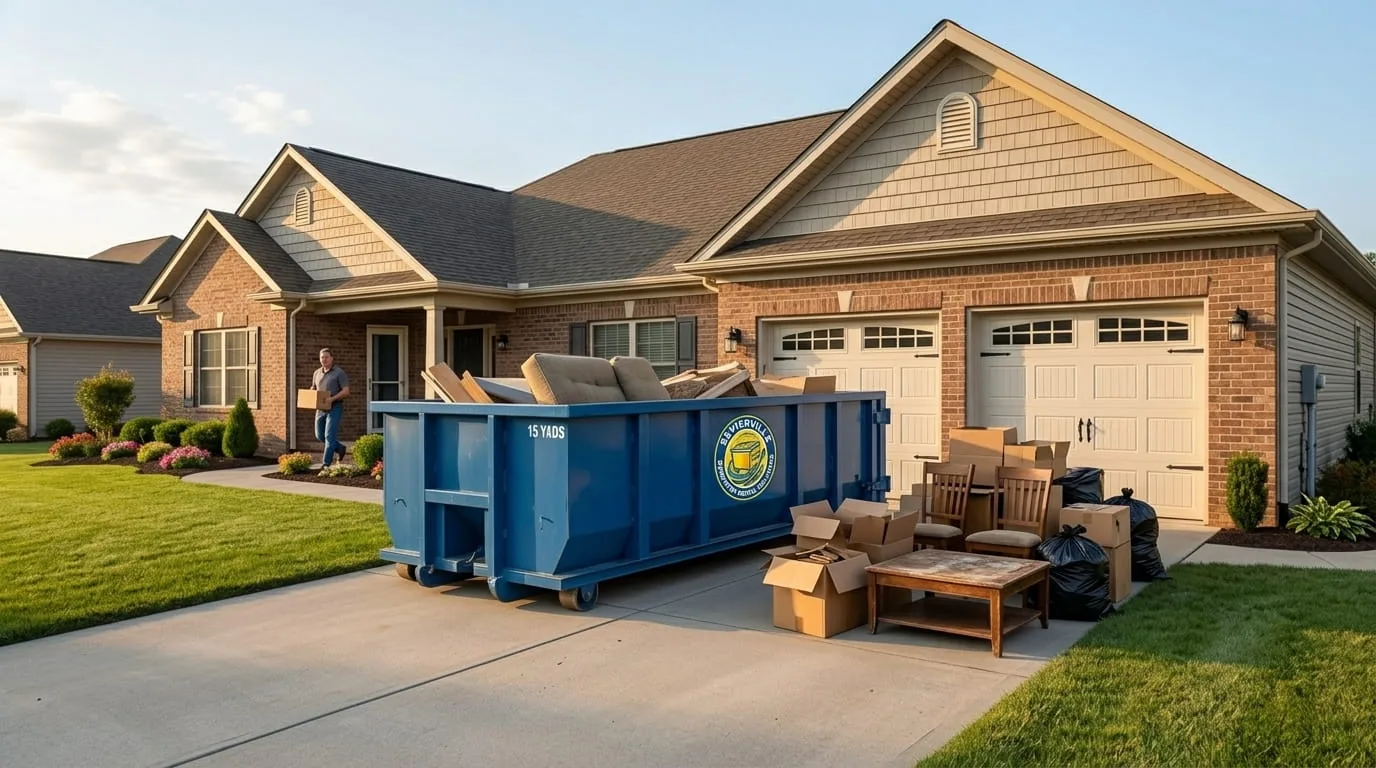
So the journey of your container is short and specific: from your driveway, tarped and secured as Tennessee law requires, to the Class IV demolition landfill, where it's weighed and tipped. That's the route, and it's the same whether you're in town or up a mountain.
What gets separated out
Not everything in a demolition load has to end up buried, and separating streams saves money. A few things route better elsewhere:
- Clean concrete, block and masonry can go to a crusher and become reusable base material rather than landfill.
- Scrap metal - appliances, ductwork, framing offcuts - has value at a scrapyard.
- Clean brush and organics can often be composted or mulched locally, fitting the county's whole approach.
- Household hazardous waste - paint, solvents, oil, batteries - is prohibited from any container and routes to a convenience center or the annual Keep Sevier Beautiful collection.
Keep those out of the general container where you can, and both your cost and your environmental footprint drop.
Why local routing matters
This is the part a national booking site can't do for you. Knowing that household waste composts, that construction debris goes to the Class IV landfill, which materials to separate, and how the tipping works - that's local knowledge, and it keeps a job moving instead of a truck idling at the wrong gate.
A local hauler runs a properly tarped truck, routes each load to the right facility the first time, and can advise you on keeping clean concrete or metal out of the general box. It's not glamorous, but it's the quiet difference between a smooth job and a wasted trip - and in a county with a two-track waste system, it matters more than most.
So next time the truck pulls away, you'll know: your household trash is on its way to becoming compost, and your renovation debris is headed for the demolition landfill - each to the right place.
Book a container in Sevierville
One flat rate covering delivery, seven days, pickup and disposal.
(865) 365-3954Questions readers ask about this
Where does construction debris go in Sevier County?
To the Sevier Solid Waste Class IV demolition landfill, a dedicated facility for construction and demolition material. The county's household waste is composted separately and can't take construction debris, so a roll-off routes it to the Class IV landfill.
Does household garbage really get composted here?
Yes. Household waste from across the county is run through a composting plant that diverts over ninety-five percent of it from the landfill, turning it into grade-A compost. It's a genuinely unusual and effective municipal system.
Can I recycle instead of sending everything to the landfill?
Often, yes. Clean concrete can be crushed for reuse, scrap metal has value at a scrapyard, and clean brush can be composted or mulched. Keeping these out of the general container is cheaper and greener - we can advise on separating them.
Why does using a local hauler matter for disposal?
Because Sevier County's two-track system - composting for household waste, a Class IV landfill for demolition debris - takes local knowledge to navigate. A local hauler routes each load to the right gate the first time and runs a tarped truck as Tennessee requires.